

Ultrahuman Ring PRO Review: The Only Piece of Tech That Actually Matches My Rings
I have a rule about wearable tech. If it looks like a gadget, it’s not coming near my hand.
I’ve tried the watches. The rubber bands, the glowing screens, the little buzzing thing that lit up mid-dinner to congratulate me on standing. I lasted about three weeks with each of them before they ended up in the same drawer as my old Fitbit and a tangle of chargers I’m scared to throw away. None of it survived contact with an actual outfit. You spend twenty minutes getting the jewelry right and then strap a tiny computer to your wrist that screams I track my steps.
So when everyone in my group chat started wearing smart rings, I was skeptical and, honestly, a little smug about it.
Then I saw one on a friend at brunch. Raw titanium, sitting on her index finger next to a stack of gold bands, and I genuinely could not tell it apart from the jewelry until she told me. That was the moment the whole category clicked for me. A health tracker you don’t have to style around — you just wear it.
The one that’s been getting the most noise lately is the Ultrahuman Ring PRO, and after going deep on it, I get the hype. Let me walk you through what it actually is, what it costs, and who it’s genuinely for — because it’s not for everyone, and I’ll be honest about that part too.
Quick disclosure, because I always tell you: some links in this post are affiliate links. If you buy through one, I earn a small commission at no extra cost to you. It never changes what I recommend — you know I’ll tell you when something isn’t worth it.
First, the honest part: I haven’t lived with this one for a year
You come here for try-on reviews, so I’ll be straight with you about what this is.
The Ring PRO is brand new and ships to US customers from mid-September, so I’m not going to pretend I’ve worn it through six months of workouts and red-eye flights. I haven’t. What I’ve done is dig through every spec on Ultrahuman’s own page, pull the real pricing, and read the hands-on reviews from the tech people who did get early units — Engadget, TechRadar, Tom’s Guide. Think of this as the research I’d do before spending my own $479, written up for you.
And spoiler: I’ve already ordered mine. A full wear-test is coming once it lands.
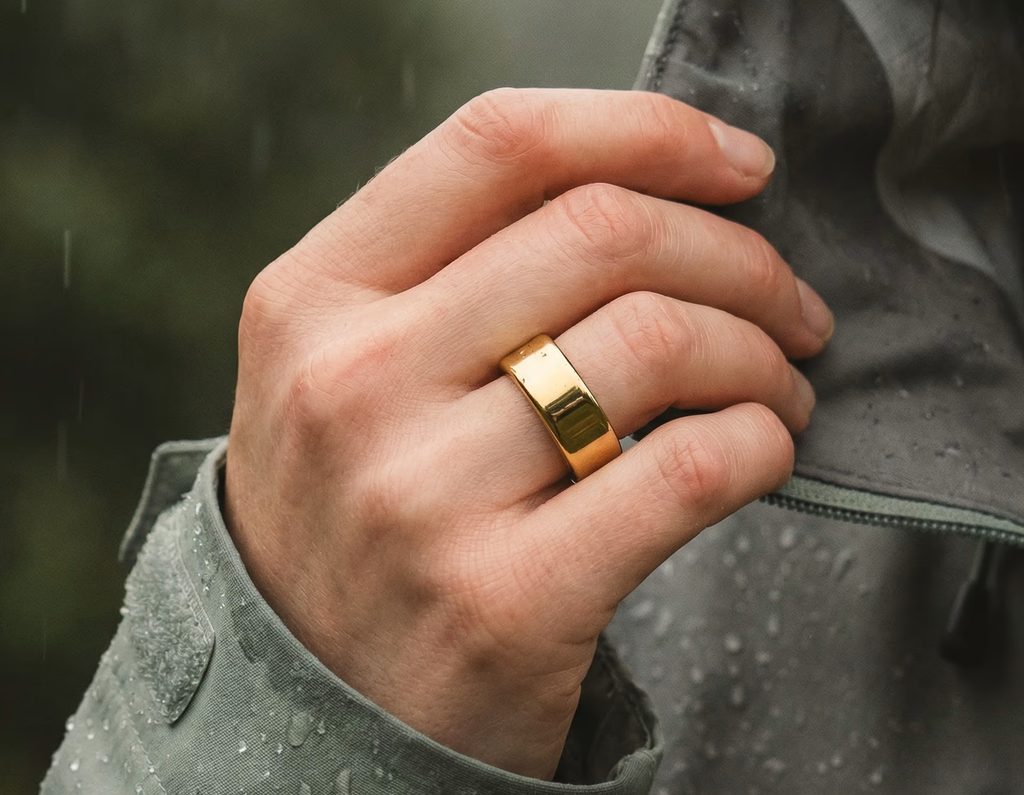
So what even is a smart ring?
If you’ve never worn one, here’s the pitch in one sentence: it’s a health tracker that lives on your finger and that you never have to look at.
No screen. No notifications lighting up your hand. No watch face. It reads your body through the arteries in your finger — which, fun fact, gives cleaner data than your wrist does — and quietly sends everything to an app on your phone. You wake up, you check your sleep score with your coffee, you get on with your day.
The Ultrahuman Ring PRO tracks the stuff that actually tells you how you’re doing:
- Sleep — full stages, not just “you slept 7 hours”
- Recovery — whether your body’s ready to push or needs a rest day
- Stress — how your nervous system is handling the day
- Heart rate & HRV, skin temperature, movement, and your circadian rhythm
It comes in four finishes — Bionic Gold, Space Silver, Aster Black, and Raw Titanium — in sizes 5 through 14, and it’s rated to 100 meters of water resistance. That last one matters more than it sounds. You can shower in it, swim laps in it, wear it in the ocean. It’s not a “take it off to wash your hands” situation. It just lives on your hand.
The build is aircraft-grade titanium, and this is the part I care about as a fashion person: it reads as jewelry. The Raw Titanium especially. Stack it, wear it solo, pair it with your engagement ring — it disappears into your hand the way good tech should.
Have a look at the four finishes here — the Bionic Gold is the one I went with.
The feature that sold me: no monthly subscription
Okay, here’s where I need you to lean in, because this is the thing that made me actually pull the trigger.
Most smart rings — including the big-name one everybody knows — make you pay a monthly membership fee to see your own health data. Around $6 a month, every month, forever. That’s about $70 a year. Buy the ring, then keep paying to use it. It’s the printer-ink model and I hate it.
Ultrahuman doesn’t do that. You buy the Ring PRO once, and your core data is yours for life. Sleep, recovery, stress, movement, heart rate — all of it, no recurring fee, no paywall on the basics. One payment and done.
For someone like me who already has enough little subscriptions quietly draining my account (I found out I’ve been paying for two cloud storage plans I forgot existed), the idea of a health tracker that isn’t another monthly line item was genuinely the deciding factor.
Now — fair is fair — Ultrahuman does offer optional paid add-ons called PowerPlugs for specialized stuff: advanced cycle and ovulation tracking, nighttime heart monitoring, that kind of thing. Those cost extra if you want them (the cycle one runs about $39 a year, for example). But here’s the key difference: those are the extras, not the essentials. Everything you actually need to track your health day to day is included in the price. You opt in to the specialty features only if they’re relevant to you. I love that the choice is mine.
Let’s talk battery, because it’s kind of ridiculous
My biggest gripe with every wearable I’ve owned is charging. My old watch needed a top-up basically every night, which meant it never tracked my sleep, which meant it was tracking… what, exactly? My commute?
The Ring PRO goes up to 15 days on a single charge. Fifteen. And if you’re using the more data-intensive mode it’s closer to 12, but even that is wild compared to what I’m used to. You charge it while you shower and forget about it for two weeks.
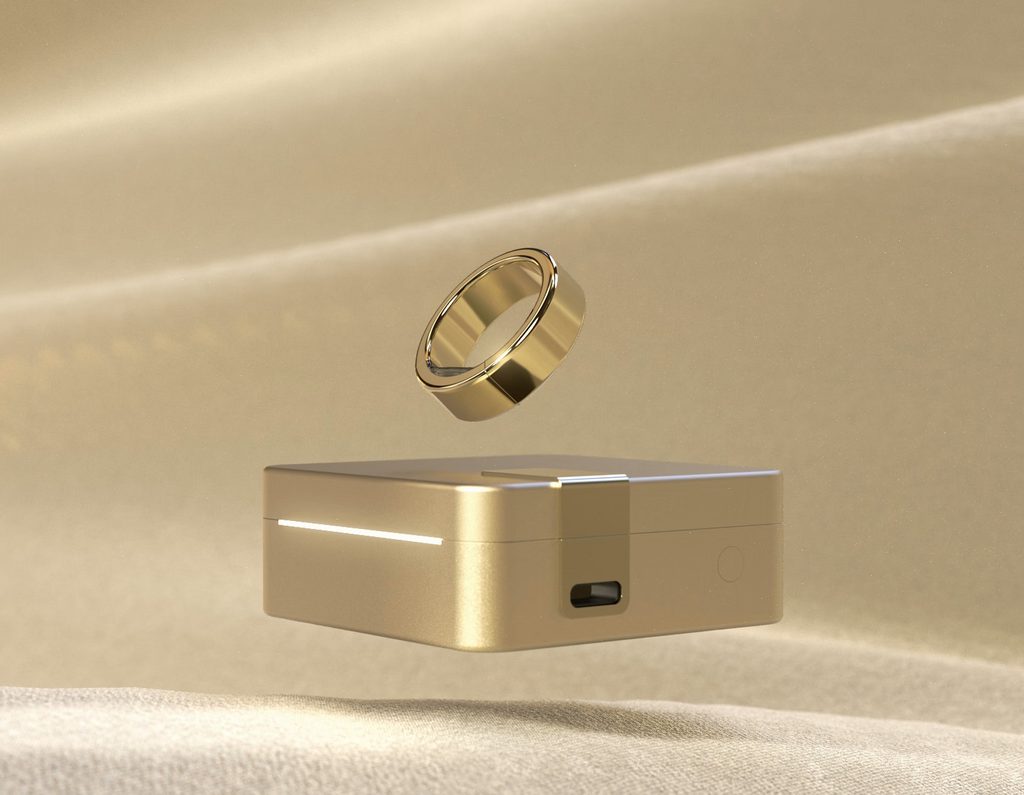
Then there’s the charging case, which comes included — not a $99 add-on like some competitors charge for. Drop the ring in the case and your total runtime stretches to around 45 days. A month and a half between wall outlets. For anyone who travels, that means you can genuinely leave the charger at home for a long trip and not think about it once.
The case is clever too: it magnetically snaps the ring in with a system Ultrahuman calls UltraSnap, designed to charge cooler than standard wireless charging so the battery lasts longer over the years. It also backs up your data and even has a little speaker so you can find it when it inevitably disappears into the bottom of your tote.
The thing I love that nobody expected: Jade, the AI
Here’s a feature I didn’t think I’d care about and now can’t stop thinking about.
The Ring PRO comes with Jade, an AI health assistant that works in real time. Instead of you squinting at charts trying to decode what your HRV means, you just… ask it. “Why am I so tired today?” “Should I work out or rest?” It pulls your live data and answers you like a conversation. No dashboards to decode.
I’m the person who screenshots her health stats and sends them to her most medically-inclined friend asking “is this bad??” — so an assistant that just explains what’s happening in plain English is, frankly, the dream.
One honest note here, and it’s important: a smart ring is a wellness device, not a doctor. If any feature ever flags something about your heart rhythm, that’s your cue to call an actual physician — not to diagnose yourself from an app. Jade is brilliant for understanding your patterns and habits. It is not a medical opinion, and Ultrahuman doesn’t claim it is.
How it stacks up against the ring everyone compares it to
You’re going to see the Ring PRO compared to Oura constantly, so let me save you the research.
| Ultrahuman Ring PRO | The Big-Name Competitor | |
|---|---|---|
| Price | $479 — charging case included | $399+ ring, case is $99 extra |
| Monthly fee | None, ever | ~$6/month (about $70/year) |
| Battery | 12–15 days (45 with case) | 6–9 days |
| Data ownership | Yours for life, one payment | Locked behind membership |
| Sizes | 5–14 | 6–13 |
| Water resistance | 100m | 100m |
Here’s the honest breakdown. In the very first year, the two are close on price. But every year after that, the competitor keeps charging you that membership fee while Ultrahuman charges you nothing. Over three years you come out ahead with the Ring PRO — and you never have the annoying experience of your own health data sitting behind a paywall.
The competitor makes a slightly slimmer ring, and it’s got a longer track record. I won’t pretend otherwise. But for the woman who wants to own her device outright, skip the subscription, and go a month between charges, Ultrahuman is the easy pick.
Also — and this matters if you have particularly small or large hands — the Ring PRO comes in sizes 5 through 14, a wider range than the competitor’s 6–13. A small thing that’s a very big thing if you’ve ever struggled to find a ring that fits.
Here’s the current pricing and the trade-in option if you want to compare for yourself.
Who should probably skip it (yes, I’m telling you this)
Because I’m not going to sell you something that isn’t right for you.
Skip it if you want a workout tracker first and foremost. There’s no GPS, so it won’t map your runs, and like most rings, the heart-rate reading can get thrown off when you’re gripping heavy weights. If your #1 goal is precise gym metrics, a chest strap or a sports watch will serve you better. This is a sleep-and-recovery device that happens to track activity, not the other way around.
Skip it if you need it this week. It ships from mid-September, and because it’s a pre-order, you’ll want to factor in the sizing-kit step (more on that below). Not a last-minute gift.
Skip it if you want the absolute thinnest, lightest ring on the market. The PRO is a touch chunkier than its slimmest rival. Still elegant, still passes as jewelry — but if featherweight is your one non-negotiable, go try both on.
For everyone else — especially if the no-subscription, own-your-data, forget-the-charger lifestyle sounds like you — it’s a genuinely lovely piece of tech.
The practical stuff I always wish reviews included
Get the free sizing kit. When you order, Ultrahuman sends you a free kit of plastic sizers so you nail the fit the first time. Do not skip this and guess — ring sizing for these runs a little different from standard, there are no half sizes, and a loose ring gives bad data because it needs skin contact to read you. The kit is yours to keep.
Which finger? Index or middle finger usually gives the cleanest readings, even though it’s called a ring. Style it wherever looks best to you, but that’s the accuracy tip.
HSA/FSA eligible. This is the money-saver nobody mentions: the Ring PRO qualifies for HSA and FSA spending, so if you have one of those accounts you’re effectively paying with pre-tax dollars. That can knock a real chunk off the price. Genuinely one of the best-kept secrets in this whole category.
Trade in your old ring for up to $115 off — and you don’t even have to mail the old one back; it’s verified by serial number. If you’re coming from an older ring, that brings the price down nicely.
Finish tip from a fashion person: the coated colors (like the gold and black) are gorgeous but can show wear if you’re rough on your hands. If you’re the type who’s constantly carrying grocery bags and gym weights, Raw Titanium hides scuffs best. The gold is stunning if you baby it a little.
My verdict
The Ultrahuman Ring PRO is the first piece of health tech I’ve been excited to wear, not just use. It tracks the things that actually matter — sleep, recovery, stress — without a monthly fee, without a screen ruining my outfit, and without needing a charge every night. The included charging case, the two-week battery, the own-your-data model, and the fact that it genuinely looks like jewelry add up to something I’m happy to put my own money on. Which I did.
Is it perfect? No. It’s not a serious workout tracker, it’s not the thinnest ring out there, and you’ll wait until September to get it. But for the woman who wants to understand her body better and keep her hand looking good, this is the one I’d point you to.
If that’s you, you can order the Ring PRO here, grab the free sizing kit, and check whether the trade-in credit applies to you. And keep an eye out — my full try-on review lands the second mine arrives. I’ll tell you exactly how it wears, scuffs, and holds up in real life, the way I always do.
Prices and shipping tiers can shift on pre-order products, so double-check the current numbers on the page before you buy.
You may be interested
FL Studio Review 2026 – Must Read Before You Buy
Three of my Reels got muted last spring. Not taken...
Why Your Outfit Videos Look Flat — and What Fixed Mine
Last fall I put together an outfit I was genuinely...
